Your science is world-class. Is your IP?
Investable IP for biotech, synbio and precision-fermentation founders. Investors check what you own before they check what you've discovered. I build IP strategies that survive diligence and add to your valuation, and I don't file patents, so my advice never depends on selling you one.

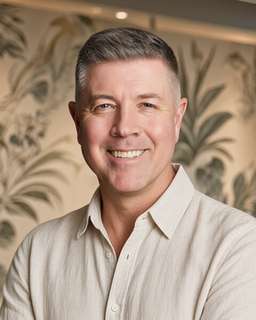
Carel Smit, founder. The patent attorney who doesn't file patents. IAM Strategy 300 Global Leader, several years running. Former medtech co-founder, and a biotech investor myself.
Where are you right now?
Three free tools. Pick the one that fits.
Fig. 1: the anatomy of an investable biotech.
Your invention is the plasmid. Around it sit the six dimensions investors judge, weighted as in the Biophile IP Readiness Kit. Click any of them.
Plasmid:
your invention
What changes when the IP is right (clients unnamed for confidentiality)
Approximate US dollar equivalents of A$480 million and A$1 billion.
“I'm the patent attorney who doesn't file patents. So my advice is about what your company is worth, not how many filings it has.” – Carel Smit, founder
How I'm paid. By the companies I advise: fixed fees, retainers and the Kit. I don't file patents, so I earn nothing from the number of filings you make. I generally don't invest in the companies I advise, to avoid conflicts of interest.
Three steps from lab to term sheet.
- 1 Score it The free IP Readiness Scorecard. Five minutes, your three priorities. Start →
- 2 Fix it The Biophile IP Readiness Kit (US$497), or IP Ready, which adds a monthly founders' group call and weekly written answers, at US$190 a month billed quarterly. See IP Ready →
- 3 Raise on it The Investor-Ready IP Sprint. Four to six weeks, US$9,500–22,000, fixed after a scoping call. First, see the IP note an investor would write about you. Ask about a sprint →
I've sat in all four seats at your table.
An IP strategy has to work for the founder, the investor, the company and the patent office at once. I've done each of those jobs.
About Biophile.
Biophile is an independent IP strategy practice for life sciences companies. I founded it to give biotech founders what I wished I'd had as one: advice shaped by what the company is worth, not by how many filings it can generate.
My training covers the three things your company is made of: three degrees in genetics, two in law, and an MPhil in Bioscience Enterprise from the University of Cambridge.
I co-founded Photon Therapy Systems, which took an LED-based wound-healing device to CE marking and into fifteen countries. Later I assessed startups' IP from the investor side for a European life sciences investor.
I have been named in the IAM Strategy 300 Global Leaders, IAM's guide to the world's leading IP strategists, several years running. Companies using my IP strategies have raised more than A$480 million in publicly disclosed financing over the past five years, with value uplifts exceeding A$1 billion. Today I work with startups, spin-outs, investors and research institutes in Europe, the UK and Australia, across synthetic biology, precision fermentation, alternative proteins, biomaterials, biologics, food systems and medtech. I've also written two books for founders: IP Is Everything and Investable Biology.
- Fungal strain that secretes a heat-stable egg-white protein. Two patent families, nothing granted.
- The strain patent names a university as co-applicant, and there is no licence or assignment in the data room. Fix this before a term sheet.
- The real moat is the downstream process. It lives in two people's heads and nowhere else.
- Investable if ownership is cleaned up. Three red flags, four questions.
- Family 1 (strain): the search report cites earlier strains. Expect the claims to narrow to one promoter and signal-peptide pair. A competitor could switch host and walk round it.
- Family 2 (purification): three months left to choose countries. The budget assumes 14. Five would cover the buyers.
- The feed profile and the heat-step sequence are the hardest things to copy. Neither is written down. The contract manufacturer's agreement has no know-how clause.
- The founder's PhD work was done at University. Two of four inventors never signed assignments. One has left the company.
- A larger competitor holds a granted patent, US , on recombinant egg-protein compositions. The company says its product is different. There is no written analysis.
- First revenue is ingredient sales in the EU, but the patents were filed US-first. The novel-food dossier data is not being treated as an asset.
- Who owns Family 1 today, on paper?
- What would a competitor need to copy the process, and who could tell them?
- Why 14 countries?
- How does your product differ from claim 1 of US ?
This is what gets written about you before the meeting.
I wrote notes like this for an investment team deciding whether to take a founder's call. This example is made up: Fernhollow Bio doesn't exist, and the black bars are for show. The problems in it are the kind a reviewer looks for.
Answer a few questions and see the note a reviewer would write about your company, with the questions you'll be asked.
Talk to Carel.
A question about the Kit, a decision you're weighing, or a raise on the horizon. Tell me where you are and I'll come back to you.
Prefer email? contact@biophile.bio
Please don't include unpublished invention details or trade secrets. We'll go into specifics once we've agreed how to work together.